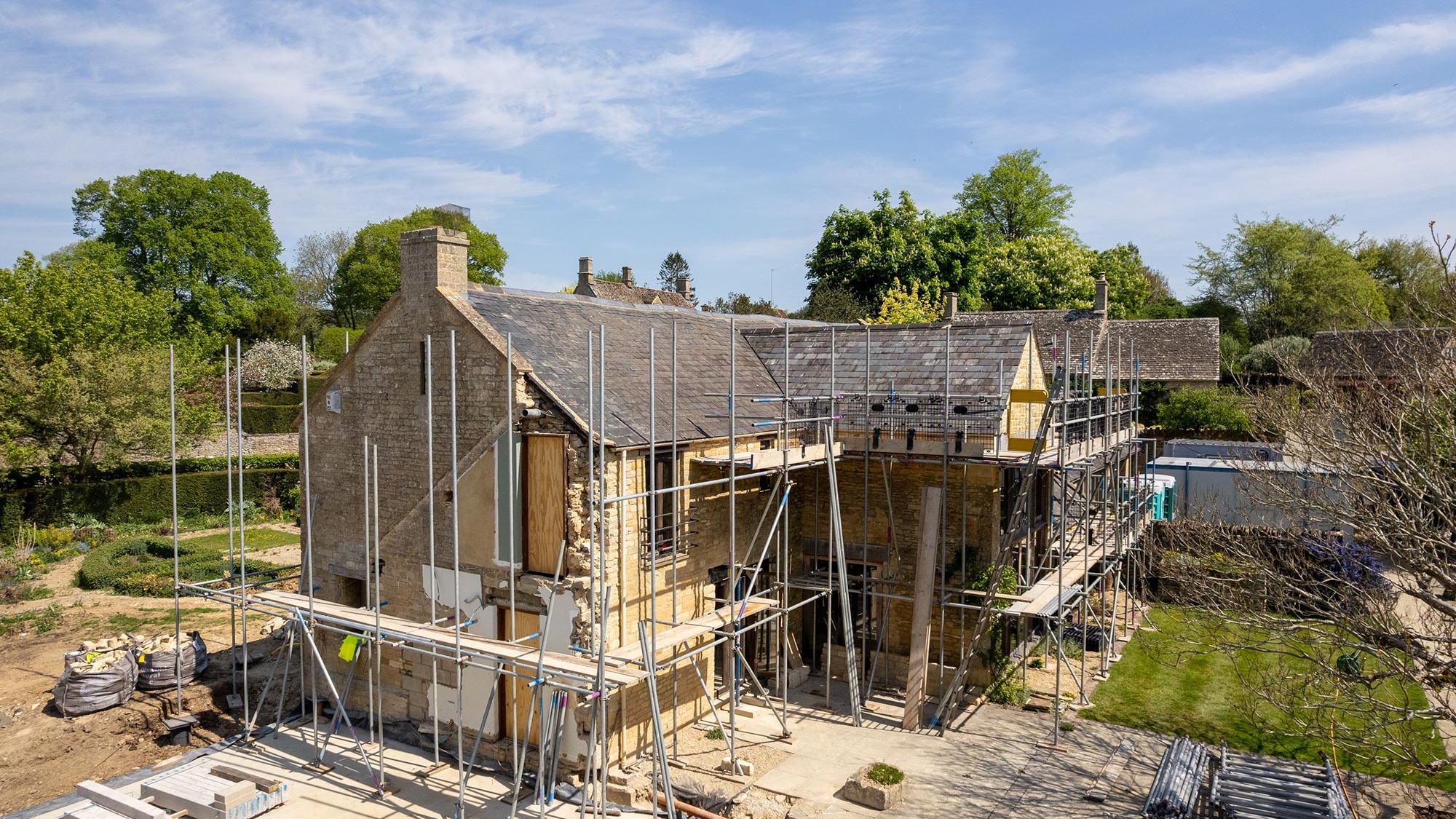
New Green Building Regulations: What Cotswolds Homeowners Need to Know Before Selling
If you own a period property in the Cotswolds and have been planning an extension, a renovation, or even a significant refurbishment, the rules have changed. And if you are thinking of selling, these changes affect how your home is valued and marketed.
The government published the Future Homes and Buildings Standards in March 2026, with new regulations coming into force from March 2027. Alongside this, tighter conservation area policies continue to be enforced across Cheltenham and the wider Cotswolds. Together, these changes are reshaping the landscape for anyone planning improvements to a period property — and the impact is not yet widely understood.
What Is Changing
Two parallel shifts are reshaping the renovation landscape in GL50–GL56:
1. The Future Homes Standard
The Future Homes and Buildings Standards, published on 24 March 2026, mandate that new homes must be “zero carbon ready” — built with heat pumps rather than gas boilers, higher levels of insulation, and on-site renewable energy generation such as solar panels. While these standards apply primarily to new-build properties from March 2027, they signal the clear direction of travel for all residential property.
For owners of existing period homes, the implications are indirect but significant. EPC requirements are tightening, and the cost of achieving compliance for Cotswolds stone properties — with their solid walls, traditional windows, and conservation constraints — is considerably higher than for modern homes. Any renovation or extension project will increasingly need to meet more demanding energy performance thresholds.
2. Tighter Conservation Area Restrictions
Local planning authorities — both Cotswold District Council and Cheltenham Borough Council — have been increasingly enforcing stringent conservation area policies. Large-scale new builds and extensions are being restricted to preserve village character and limit housing supply growth.
For the Cotswolds Area of Outstanding Natural Beauty (AONB), recent policy updates emphasise preserving the landscape with stricter design guidelines. This impacts luxury property developments and renovations, requiring compliance with enhanced aesthetic standards.
What This Means for Sellers
For anyone selling a period property, these changes have three practical implications:
Think Twice Before Major Works
The cost of achieving planning consent and building regulations compliance has increased. Extensions and renovations now carry additional expense in the form of energy compliance measures, heritage assessments, and design modifications to satisfy both building regulations and conservation officers. The uplift can be significant — particularly for listed or conservation area properties where the solutions are more limited.
Before committing to major works pre-sale, the question is whether the market will reward the investment. In many cases, the answer is no. Buyers at this level often prefer to commission their own improvements to their own specification. A property with clear planning potential can be more valuable than one with a recently completed extension that may not match the buyer’s taste.
EPC Ratings Matter More Than They Used To
While prestige buyers are rarely deterred by a poor EPC rating alone, the regulatory direction of travel is clear. Properties with better energy performance — or with improvements already made — have a narrative advantage. If you have invested in a heat pump, improved insulation, or upgraded glazing (within conservation rules), make sure your agent highlights this in the marketing.
Planning History Is a Selling Point
A property with an established planning history — previous consents, pre-application advice, or a relationship with the local planning authority — is more attractive to buyers who want to extend or modify. This is particularly true in conservation areas where the path to consent is less predictable.
The Practical Advice
For Cotswolds homeowners thinking about selling in the next 12–18 months, the guidance is straightforward:
- Do not start major renovation or extension projects unless they were already in progress. The cost-to-value equation has shifted against speculative improvements.
- Do invest in presentation. The changes that deliver the best return remain the same: kerb appeal, decluttering, lighting, and garden maintenance. None of these require planning consent.
- Do obtain an up-to-date EPC and consider cost-effective improvements that could move the rating up a band.
- Do gather your planning documentation. If previous consents exist, if pre-application advice has been received, if there is an established relationship with the planning authority — all of this has value to a buyer.
- Do talk to a local agent who understands the interplay between planning policy and property value in this specific market. National firms rarely have the granular local knowledge that matters here.
A Changing Landscape
The Cotswolds has always been a place where character, history, and landscape matter more than specification sheets. The new regulations reinforce that — they are designed to protect what makes this area special.
For sellers, the message is clear: work with the grain of the market, not against it. Present your home beautifully, price it honestly, and let its character speak for itself.
For a conversation about how these changes affect your property specifically, get in touch. Every home in the Cotswolds is different — and the advice should be too.
In Summary
The Future Homes and Buildings Standards, published in March 2026 and effective from March 2027, primarily affect new-build properties but signal the direction of travel for all housing. For Cotswolds period property owners, tighter conservation area restrictions and evolving EPC expectations mean that major renovation projects are more complex and expensive than before. The practical advice: invest in presentation rather than speculative improvements, gather your planning documentation, and work with an agent who understands local planning policy.

Elliott Wakefield
Member of the Chartered Institute of Marketing (MCIM) and Prestige Property Expert in Cheltenham and the Cotswolds. Licensed with The Prestige Property Experts.
About Elliott WakefieldReady to discuss your property?
Book a private market appraisal with no obligation.
Book a Market Appraisal